ScopeScottish economist and philosopher · 1723–1790
Adam Smith
Founder of modern economics, who showed how trade and self-interest can serve the common good.
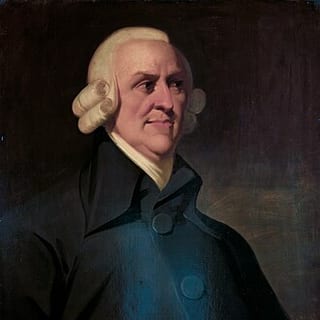
Portrait: Unknown artist (the "Muir portrait"). Public domain, original file. Percents beside a name count only the dials both have a quote on.
Discover your own profile →scopevote.com
You and Adam Smith
Answer 27 statements (about 5 minutes) to compare yourself with Adam Smith and 76 others.
Discover my profile →Ideologies linked to Adam Smith
Open one to read what it holds, in its own founding texts.
Where Adam Smith stood, in Adam Smith's own words
Each position is Scope's reading of the quote shown, applied to today's question. They lived in another time; read the words and judge for yourself.
- Markets or sharedLeaning · MarketsMarketsShared
“It is not from the benevolence of the butcher, the brewer, or the baker that we expect our dinner, but from their regard to their own interest.”
The Wealth of Nations, 1776 · Book I, ch. 2 The other side of their view:
“No society can surely be flourishing and happy, of which the far greater part of the members are poor and miserable.”
The Wealth of Nations, 1776 · Book I, ch. 8 - Faith in public lifeLeaning · SecularSecularFaith
“it would probably have dealt equally and impartially with all the different sects, and have allowed every man to choose his own priest, and his own religion, as he thought proper.”
The Wealth of Nations, 1776 · Book V, ch. 1, on governments and religion - Nature or technologyLeaning · TechnologyNatureTechnology
“the invention of a great number of machines which facilitate and abridge labour, and enable one man to do the work of many.”
The Wealth of Nations, 1776 · Book I, ch. 1 - Who decidesLeaning · PeoplePeopleLeaders
“The statesman, who should attempt to direct private people in what manner they ought to employ their capitals, would not only load himself with a most unnecessary attention, but assume an authority which could safely be trusted, not only to no single person, but to no council or senate whatever”
The Wealth of Nations, 1776 · Book IV, ch. 2 - World or nationVery strong · WorldWorldNation
“It is the maxim of every prudent master of a family, never to attempt to make at home what it will cost him more to make than to buy.”
The Wealth of Nations, 1776 · Book IV, ch. 2, on free trade - Peace or strengthLeaning · StrengthPeaceStrength
“As defence, however, is of much more importance than opulence, the act of navigation is, perhaps, the wisest of all the commercial regulations of England.”
The Wealth of Nations, 1776 · Book IV, ch. 2
No clear quote on freedom or order, change or tradition, local or central, so Adam Smith is not placed there and those dials are left out of any comparison.