Jawaharlal Nehru
Leader of the Indian independence movement and India's Prime Minister from 1947 to 1964, who favored a planned economy and a state that treats every religion alike.
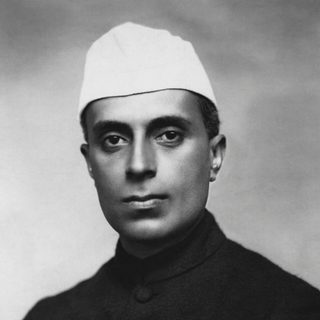
Portrait: Keystone View Company/FPG. Public domain, original file. Percents beside a name count only the dials both have a quote on.
You and Nehru
Answer 27 statements (about 5 minutes) to compare yourself with Nehru and 76 others.
Discover my profile →Ideologies linked to Nehru
Open one to read what it holds, in its own founding texts.
Where Nehru stood, in Nehru's own words
Each position is Scope's reading of the quote shown, applied to today's question. They lived in another time; read the words and judge for yourself.
- Markets or sharedLeaning · SharedMarketsShared
“to fight and end poverty and ignorance and disease; to build up a prosperous, democratic and progressive nation, and to create social, economic and political institutions which will ensure justice and fullness of life to every man and woman.”
A Tryst With Destiny (speech to India's Constituent Assembly), 1947 · On India's aims - Faith in public lifeLeaning · SecularSecularFaith
“All of us, to whatever religion we may belong, are equally the children of India with equal rights, privileges and obligations. We cannot encourage communalism or narrow-mindedness”
A Tryst With Destiny (speech to India's Constituent Assembly), 1947 - Who decidesLeaning · PeoplePeopleLeaders
“The responsibility rests upon this assembly, a sovereign body representing the sovereign people of India.”
A Tryst With Destiny (speech to India's Constituent Assembly), 1947 - World or nationLeaning · WorldWorldNation
“Peace has been said to be indivisible; so is freedom, so is prosperity now, and so also is disaster in this one world that can no longer be split into isolated fragments.”
A Tryst With Destiny (speech to India's Constituent Assembly), 1947 · On one world; the same speech pledges dedication first "to the service of India and her people" - Peace or strengthLeaning · PeacePeaceStrength
“To the nations and peoples of the world we send greetings and pledge ourselves to cooperate with them in furthering peace, freedom and democracy.”
A Tryst With Destiny (speech to India's Constituent Assembly), 1947
No clear quote on freedom or order, change or tradition, nature or technology, local or central, so Nehru is not placed there and those dials are left out of any comparison.