ScopeEnglish philosopher · 1588–1679
Thomas Hobbes
Lived through civil war and argued that only a strong, undivided government keeps people from chaos.
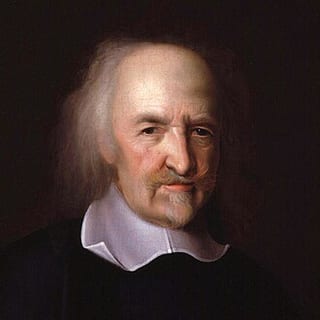
Portrait: John Michael Wright. Public domain, original file. Percents beside a name count only the dials both have a quote on.
Discover your own profile →scopevote.com
You and Hobbes
Answer 27 statements (about 5 minutes) to compare yourself with Hobbes and 76 others.
Discover my profile →Ideologies linked to Hobbes
Open one to read what it holds, in its own founding texts.
Where Hobbes stood, in Hobbes's own words
Each position is Scope's reading of the quote shown, applied to today's question. They lived in another time; read the words and judge for yourself.
- Freedom or orderVery strong · OrderFreedomOrder
“during the time men live without a common Power to keep them all in awe, they are in that condition which is called Warre; and such a warre, as is of every man, against every man.”
Leviathan, 1651 · ch. 13 - Markets or sharedLeaning · SharedMarketsShared
“whereas many men, by accident unevitable, become unable to maintain themselves by their labour; they ought not to be left to the Charity of private persons; but to be provided for, (as far-forth as the necessities of Nature require,) by the Lawes of the Common-wealth.”
Leviathan, 1651 · ch. 30 - Change or traditionLeaning · TraditionChangeTradition
“the People are to be taught, First, that they ought not to be in love with any forme of Government they see in their neighbour Nations, more than with their own, nor (whatsoever present prosperity they behold in Nations that are otherwise governed than they,) to desire change.”
Leviathan, 1651 · ch. 30 - Who decidesVery strong · LeadersPeopleLeaders
“where the publique and private interest are most closely united, there is the publique most advanced. Now in Monarchy, the private interest is the same with the publique.”
Leviathan, 1651 · ch. 19 - Local or centralVery strong · CentralLocalCentral
“the great number of Corporations; which are as it were many lesser Common-wealths in the bowels of a greater, like wormes in the entrayles of a naturall man.”
Leviathan, 1651 · ch. 29, on what weakens a commonwealth - Peace or strengthLeaning · StrengthPeaceStrength
“in all times, Kings, and persons of Soveraigne authority, because of their Independency, are in continuall jealousies, and in the state and posture of Gladiators; having their weapons pointing, and their eyes fixed on one another; that is, their Forts, Garrisons, and Guns upon the Frontiers of their Kingdomes; and continuall Spyes upon their neighbours; which is a posture of War. But because they uphold thereby, the Industry of their Subjects; there does not follow from it, that misery, which accompanies the Liberty of particular men.”
Leviathan, 1651 · ch. 13
No clear quote on faith in public life, nature or technology, world or nation, so Hobbes is not placed there and those dials are left out of any comparison.