Oliver Cromwell
Army commander on Parliament's side in the English Civil War. He signed King Charles I's death warrant in 1649, led the army that conquered Ireland and Scotland, and in 1653 became Lord Protector, governing without a king under a written constitution. His army's campaign in Ireland in 1649 killed thousands of soldiers and civilians.
Scope places people by what their own words say, whoever they were. A placement is not praise, and it says nothing about what this ruler did. Dictators and absolute rulers are never part of your results or share pictures.
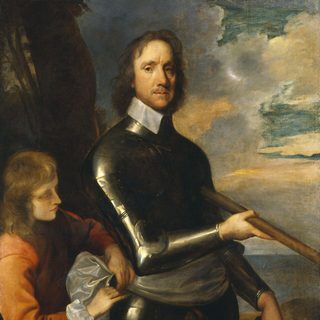
Portrait: Robert Walker. Public domain, original file. Percents beside a name count only the dials both have a quote on.
You and Cromwell
Answer 27 statements (about 5 minutes) to compare yourself with Cromwell.
Discover my profile →Where Cromwell stood, in Cromwell's own words
Each position is Scope's reading of the quote shown, applied to today's question. They lived in another time; read the words and judge for yourself.
- Freedom or orderLeaning · FreedomFreedomOrder
“It was the maintaining of the Liberty of these Nations ; our Civil Liberties as Men, our Spiritual Liberties as Christians.”
The Letters and Speeches of Oliver Cromwell, vol. 3 (ed. Thomas Carlyle, 1904): Speeches to Parliament, 1656–1658, 1656–1658 · to both Houses of Parliament, January 1658, on what the war was fought for - Faith in public lifeLeaning · FaithSecularFaith
“the Interest of the People of God in the first place”
The Letters and Speeches of Oliver Cromwell, vol. 3 (ed. Thomas Carlyle, 1904): Speeches to Parliament, 1656–1658, 1656–1658 · to Parliament, April 1657, on what a settlement must protect - Who decidesBalancedPeopleLeaders
“The Government by a Single Person and a Parliament is a fundamental!”
The Letters and Speeches of Oliver Cromwell, vol. 2 (ed. Thomas Carlyle, 1904): Speeches to Parliament, 1654, 1654 · to Parliament, September 1654, on his government The other side of their view:
“one person neither in Parliament nor out of Parliament should have the power of ordering it”
The Letters and Speeches of Oliver Cromwell, vol. 2 (ed. Thomas Carlyle, 1904): Speeches to Parliament, 1654, 1654 · same speech, on who commands the militia - World or nationLeaning · WorldWorldNation
“a brotherly fellow-feeling of the interest of all the Protestant Christians in the world”
The Letters and Speeches of Oliver Cromwell, vol. 3 (ed. Thomas Carlyle, 1904): Speeches to Parliament, 1656–1658, 1656–1658 · to both Houses of Parliament, January 1658, on Protestants abroad - Peace or strengthLeaning · StrengthPeaceStrength
“there will be a necessity, for the preservation of the peace of the Three Nations, to keep up the present established Army in England, Scotland and Ireland ; and also a considerable Fleet for some good time”
The Letters and Speeches of Oliver Cromwell, vol. 3 (ed. Thomas Carlyle, 1904): Speeches to Parliament, 1656–1658, 1656–1658 · to Parliament, 1657, on the cost of the army
No clear quote on markets or shared, change or tradition, nature or technology, local or central, so Cromwell is not placed there and those dials are left out of any comparison.