ScopeItalian friar and theologian · 1225–1274
Thomas Aquinas
Dominican friar whose Summa Theologiae joined Christian teaching with Aristotle's philosophy, including long sections on law, property and war.
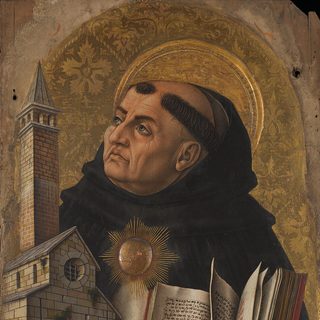
Portrait: Carlo Crivelli. Public domain, original file. Percents beside a name count only the dials both have a quote on.
Discover your own profile →scopevote.com
You and Aquinas
Answer 27 statements (about 5 minutes) to compare yourself with Aquinas and 76 others.
Discover my profile →Where Aquinas stood, in Aquinas's own words
Each position is Scope's reading of the quote shown, applied to today's question. They lived in another time; read the words and judge for yourself.
- Markets or sharedBalancedMarketsShared
“in this regard it is lawful for man to possess property.”
Summa Theologiae II-II, Question 66: Theft and robbery, 1274 · Summa Theologiae II-II, Q. 66, art. 2, on owning things The other side of their view:
“man ought to possess external things, not as his own, but as common, so that, to wit, he is ready to communicate them to others in their need.”
Summa Theologiae II-II, Question 66: Theft and robbery, 1274 · Summa Theologiae II-II, Q. 66, art. 2, on using things - Change or traditionLeaning · TraditionChangeTradition
“human law should never be changed, unless, in some way or other, the common weal be compensated according to the extent of the harm done in this respect.”
Summa Theologiae I-II, Question 97: Of change in laws, 1274 · Summa Theologiae I-II, Q. 97, art. 2, on changing human law - Faith in public lifeLeaning · FaithSecularFaith
“such should be submitted even to bodily compulsion, that they may fulfil what they have promised, and hold what they, at one time, received.”
Summa Theologiae II-II, Question 10: Unbelief, 1274 · Summa Theologiae II-II, Q. 10, art. 8, on heretics and apostates only; the same article says heathens and Jews are "by no means to be compelled to the faith" - Who decidesBalancedPeopleLeaders
“the best form of government is in a state or kingdom, where one is given the power to preside over all; while under him are others having governing powers: and yet a government of this kind is shared by all, both because all are eligible to govern, and because the rules are chosen by all.”
Summa Theologiae I-II, Question 105: The judicial precepts, 1274 · Summa Theologiae I-II, Q. 105, art. 1, on the best government - Peace or strengthLeaning · StrengthPeaceStrength
“Secondly, a just cause is required, namely that those who are attacked, should be attacked because they deserve it on account of some fault.”
Summa Theologiae II-II, Question 40: War, 1274 · Summa Theologiae II-II, Q. 40, art. 1, on when war is just
No clear quote on freedom or order, nature or technology, local or central, world or nation, so Aquinas is not placed there and those dials are left out of any comparison.