Economic ideology
Marxism
Ideas from Karl Marx and Friedrich Engels that explain history as a struggle between social classes and call for workers to own the main means of production together, aiming at a society without classes.
Placed from: The Communist Manifesto (Marx and Engels); The Principles of Communism (Engels); Critique of the Gotha Programme, part IV (Marx).
You and Marxism
Answer 27 statements (about 5 minutes) to compare yourself with Marxism and every other ideology.
Discover my profile →What it holds, in its own texts
Each position is Scope's reading of the quote shown. It describes what the defining texts say; people who use the name differ.
- Freedom or orderBalancedFreedomOrder
“Freedom consists in converting the state from an organ superimposed upon society into one completely subordinate to it”
Critique of the Gotha Programme, part IV (Marx), 1875 · Marx on what freedom means The other side of their view:
“the state can be nothing but the revolutionary dictatorship of the proletariat”
Critique of the Gotha Programme, part IV (Marx), 1875 · Marx on the state in the transition to communism - Markets or sharedVery strong · SharedMarketsShared
“the theory of the Communists may be summed up in the single sentence: Abolition of private property.”
The Communist Manifesto (Marx and Engels), 1848 - Change or traditionVery strong · ChangeChangeTradition
“the Communists everywhere support every revolutionary movement against the existing social and political order of things.”
The Communist Manifesto (Marx and Engels), 1848 - Faith in public lifeVery strong · SecularSecularFaith
“communism is the stage of historical development which makes all existing religions superfluous and brings about their disappearance”
The Principles of Communism (Engels), 1847 · Engels, answering what communism's attitude to existing religions will be - Nature or technologyLeaning · TechnologyNatureTechnology
“to increase the total of productive forces as rapidly as possible.”
The Communist Manifesto (Marx and Engels), 1848 · the same list of aims for the working class in power - Who decidesLeaning · PeoplePeopleLeaders
“The proletarian movement is the self-conscious, independent movement of the immense majority, in the interests of the immense majority.”
The Communist Manifesto (Marx and Engels), 1848 - Local or centralLeaning · CentralLocalCentral
“to centralise all instruments of production in the hands of the State”
The Communist Manifesto (Marx and Engels), 1848 · on what the working class does once it holds political power - World or nationVery strong · WorldWorldNation
“The working men have no country.”
The Communist Manifesto (Marx and Engels), 1848
No clear quote on peace or strength, so Marxism is not placed there and those dials are left out of any comparison.
People linked to Marxism
Thinkers and leaders whose own words fit this ideology. Open one to read the quotes.
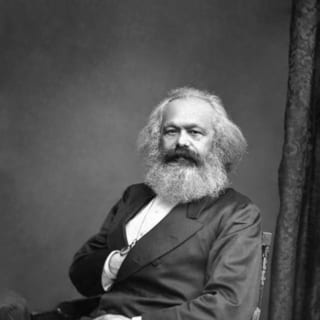 Karl Marx
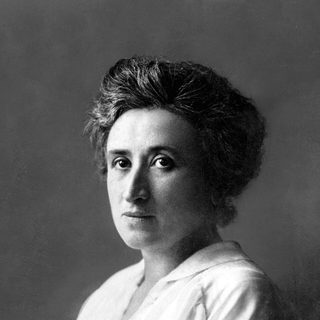 Rosa Luxemburg
Dictators and absolute rulers
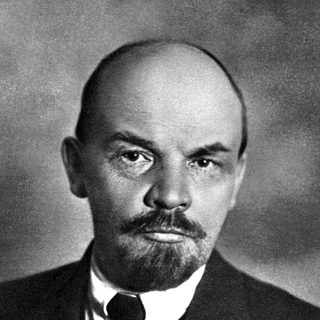 Vladimir Lenin