Sun Yat-sen
Revolutionary who helped end imperial rule in China in 1911 and became the first provisional president of the Republic of China.
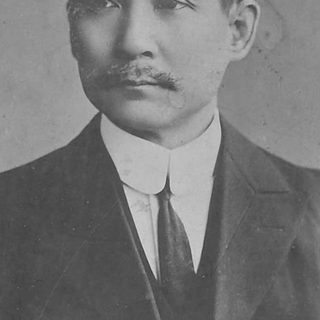
Portrait: K.T. Thompson (Shanghai Tongsheng Photo Studio). Public domain, original file. Percents beside a name count only the dials both have a quote on.
You and Sun Yat-sen
Answer 27 statements (about 5 minutes) to compare yourself with Sun Yat-sen and 76 others.
Discover my profile →Ideologies linked to Sun Yat-sen
Open one to read what it holds, in its own founding texts.
Where Sun Yat-sen stood, in Sun Yat-sen's own words
Each position is Scope's reading of the quote shown, applied to today's question. They lived in another time; read the words and judge for yourself.
- Change or traditionLeaning · TraditionChangeTradition
“If we want to realize Pan-Asianism in this new world, what should be its foundation if not our ancient civilization and culture?”
Pan-Asianism (speech in Kobe, Japan), 1924 - Nature or technologyLeaning · TechnologyNatureTechnology
“we must then learn science from Europe for our industrial development and the improvement of our armaments”
Pan-Asianism (speech in Kobe, Japan), 1924 - World or nationLeaning · WorldWorldNation
“we advocate the avenging of the wrong done to those in revolt against the civilization of the rule of Might, with the aim of seeking a civilization of peace and equality and the emancipation of all races.”
Pan-Asianism (speech in Kobe, Japan), 1924 - Peace or strengthBalancedPeaceStrength
“Benevolence and virtue must be the foundations of Pan-Asianism.”
Pan-Asianism (speech in Kobe, Japan), 1924 · On the rule of Right and the rule of Might The other side of their view:
“If we want to regain our rights we must resort to force.”
Pan-Asianism (speech in Kobe, Japan), 1924
No clear quote on freedom or order, markets or shared, faith in public life, who decides, local or central, so Sun Yat-sen is not placed there and those dials are left out of any comparison.