ScopeItalian diplomat and writer · 1469–1527
Niccolò Machiavelli
Florentine official who wrote frankly about how power is won and kept.
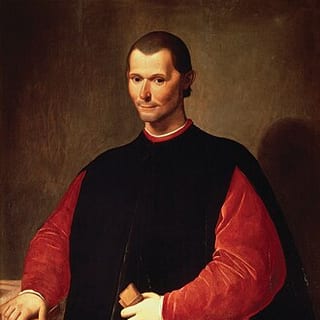
Portrait: Santi di Tito. Public domain, original file. Percents beside a name count only the dials both have a quote on.
Discover your own profile →scopevote.com
You and Machiavelli
Answer 27 statements (about 5 minutes) to compare yourself with Machiavelli and 76 others.
Discover my profile →Ideologies linked to Machiavelli
Open one to read what it holds, in its own founding texts.
Where Machiavelli stood, in Machiavelli's own words
Each position is Scope's reading of the quote shown, applied to today's question. They lived in another time; read the words and judge for yourself.
- Freedom or orderBalancedFreedomOrder
“a prince, so long as he keeps his subjects united and loyal, ought not to mind the reproach of cruelty; because with a few examples he will be more merciful than those who, through too much mercy, allow disorders to arise”
The Prince (trans. W. K. Marriott), 1532 · ch. 17 The other side of their view:
“those who condemn these dissensions between the nobles and the commons, condemn what was the prime cause of Rome becoming free”
Discourses on Livy (trans. Ninian Hill Thomson), 1531 · Book I, ch. 4 - Markets or sharedLeaning · SharedMarketsShared
“it should be the object of every well-governed commonwealth to make the State rich and keep individual citizens poor”
Discourses on Livy (trans. Ninian Hill Thomson), 1531 · Book I, ch. 37 - Faith in public lifeLeaning · FaithSecularFaith
“Princes and commonwealths that would save themselves from growing corrupted, should before all things keep uncorrupted the rites and ceremonies of religion, and always hold them in reverence”
Discourses on Livy (trans. Ninian Hill Thomson), 1531 · Book I, ch. 12 - Who decidesBalancedPeopleLeaders
“while the dictatorship was conferred in conformity with public ordinances, and not through personal influence, it was constantly beneficial to the city.”
Discourses on Livy (trans. Ninian Hill Thomson), 1531 · Book I, ch. 34, on Rome's emergency dictators The other side of their view:
“But as for prudence and stability of purpose, I affirm that a people is more prudent, more stable, and of better judgment than a prince.”
Discourses on Livy (trans. Ninian Hill Thomson), 1531 · Book I, ch. 58 - World or nationLeaning · NationWorldNation
“To all of us this barbarous dominion stinks. Let, therefore, your illustrious house take up this charge with that courage and hope with which all just enterprises are undertaken, so that under its standard our native country may be ennobled”
The Prince (trans. W. K. Marriott), 1532 · ch. 26, urging Italy to drive out foreign armies - Peace or strengthVery strong · StrengthPeaceStrength
“A prince ought to have no other aim or thought, nor select anything else for his study, than war and its rules and discipline”
The Prince (trans. W. K. Marriott), 1532 · ch. 14
No clear quote on change or tradition, nature or technology, local or central, so Machiavelli is not placed there and those dials are left out of any comparison.