Ruhollah Khomeini
Shia cleric who led the 1979 revolution that ended Iran's monarchy and became Supreme Leader, with final authority over the state under rule by Islamic jurists. Iran fought the Iran–Iraq War (1980–1988) under his rule, and thousands of political prisoners were executed.
Scope places people by what their own words say, whoever they were. A placement is not praise, and it says nothing about what this ruler did. Dictators and absolute rulers are never part of your results or share pictures.
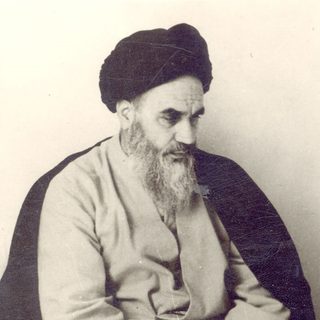
Portrait: Derived from a postcard. Public domain, original file. Percents beside a name count only the dials both have a quote on.
You and Khomeini
Answer 27 statements (about 5 minutes) to compare yourself with Khomeini.
Discover my profile →Where Khomeini stood, in Khomeini's own words
Each position is Scope's reading of the quote shown, applied to today's question. They lived in another time; read the words and judge for yourself.
- Freedom or orderLeaning · OrderFreedomOrder
“Islam has laid down no laws for the practice of usury, for banking based on usury, for the consumption of alcohol, or for the cultivation of sexual vice, having radically prohibited all of these.”
Islamic Government: Governance of the Jurist (lectures given in Najaf), 1970 · on what Islamic law prohibits - Markets or sharedLeaning · SharedMarketsShared
“For that is your Islamic duty, to take from the rich and give to the poor.”
Islamic Government: Governance of the Jurist (lectures given in Najaf), 1970 · to Islamic scholars, on their duty - Change or traditionVery strong · TraditionChangeTradition
“Any person who claims that the formation of an Islamic government is not necessary implicitly denies the necessity for the implementation of Islamic law, the universality and comprehensiveness of that law, and the eternal validity of the faith itself.”
Islamic Government: Governance of the Jurist (lectures given in Najaf), 1970 · on claims that Islamic government is not necessary - Faith in public lifeVery strong · FaithSecularFaith
“The slogan of the separation of religion from politics and the demand that Islamic scholars should not intervene in social and political affairs have been formulated and propagated by the imperialists.”
Islamic Government: Governance of the Jurist (lectures given in Najaf), 1970 · on keeping religion out of politics - Who decidesVery strong · LeadersPeopleLeaders
“It is they who supervise all executive and administrative affairs of the country, together with all planning.”
Islamic Government: Governance of the Jurist (lectures given in Najaf), 1970 · on the Islamic jurists (the fuqaha)
No clear quote on nature or technology, local or central, world or nation, peace or strength, so Khomeini is not placed there and those dials are left out of any comparison.