Andrew Jackson
Army general and Tennessee politician who, as president, vetoed the recharter of the Second Bank of the United States and signed the Indian Removal Act.
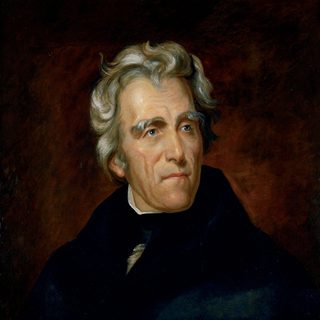
Portrait: Thomas Sully. Public domain, original file. Percents beside a name count only the dials both have a quote on.
You and Jackson
Answer 27 statements (about 5 minutes) to compare yourself with Jackson and 76 others.
Discover my profile →Ideologies linked to Jackson
Open one to read what it holds, in its own founding texts.
Where Jackson stood, in Jackson's own words
Each position is Scope's reading of the quote shown, applied to today's question. They lived in another time; read the words and judge for yourself.
- Freedom or orderLeaning · FreedomFreedomOrder
“As long as our Government is administered for the good of the people, and is regulated by their will; as long as it secures to us the rights of person and of property, liberty of conscience and of the press, it will be worth defending”
First Inaugural Address, 1829 - Markets or sharedLeaning · MarketsMarketsShared
“Distinctions in society will always exist under every just government. Equality of talents, of education, or of wealth can not be produced by human institutions.”
Veto Message on the Bank of the United States, 1832 - Who decidesLeaning · PeoplePeopleLeaders
“It is to be regretted that the rich and powerful too often bend the acts of government to their selfish purposes.”
Veto Message on the Bank of the United States, 1832 - Local or centralLeaning · LocalLocalCentral
“it will be my aim to inculcate by my official acts the necessity of exercising by the General Government those powers only that are clearly delegated”
Second Inaugural Address, 1833 The other side of their view:
“Without union our independence and liberty would never have been achieved; without union they never can be maintained.”
Second Inaugural Address, 1833 - Peace or strengthLeaning · PeacePeaceStrength
“Considering standing armies as dangerous to free governments in time of peace, I shall not seek to enlarge our present establishment, nor disregard that salutary lesson of political experience which teaches that the military should be held subordinate to the civil power.”
First Inaugural Address, 1829
No clear quote on change or tradition, faith in public life, nature or technology, world or nation, so Jackson is not placed there and those dials are left out of any comparison.