Scope34th U.S. President · 1890–1969
Dwight D. Eisenhower
Supreme commander in World War II who, as president, warned against the military-industrial complex.
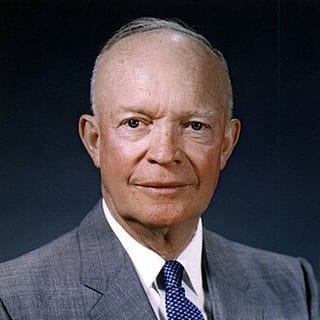
Portrait: White House photograph. Public domain, original file. Percents beside a name count only the dials both have a quote on.
Discover your own profile →scopevote.com
You and Eisenhower
Answer 27 statements (about 5 minutes) to compare yourself with Eisenhower and 76 others.
Discover my profile →Ideologies linked to Eisenhower
Open one to read what it holds, in its own founding texts.
Where Eisenhower stood, in Eisenhower's own words
Each position is Scope's reading of the quote shown, applied to today's question. They lived in another time; read the words and judge for yourself.
- Freedom or orderBalancedFreedomOrder
“We must never let the weight of this combination endanger our liberties or democratic processes.”
Farewell Address, 1961 The other side of their view:
“so that security and liberty may prosper together.”
Farewell Address, 1961 - Markets or sharedBalancedMarketsShared
“the need to maintain balance in and among national programs-balance between the private and the public economy, balance between cost and hoped for advantage”
Farewell Address, 1961 - Faith in public lifeLeaning · FaithSecularFaith
“In this way we are reaffirming the transcendence of religious faith in America's heritage and future”
Statement on adding "under God" to the Pledge, 1954 - Who decidesLeaning · PeoplePeopleLeaders
“we must also be alert to the equal and opposite danger that public policy could itself become the captive of a scientific-technological elite.”
Farewell Address, 1961 - World or nationLeaning · WorldWorldNation
“This would be a declared total war, not upon any human enemy but upon the brute forces of poverty and need.”
"The Chance for Peace" address, 1953 - Peace or strengthBalancedPeaceStrength
“A vital element in keeping the peace is our military establishment. Our arms must be mighty, ready for instant action, so that no potential aggressor may be tempted to risk his own destruction.”
Farewell Address, 1961 The other side of their view:
“Every gun that is made, every warship launched, every rocket fired signifies, in the final sense, a theft from those who hunger and are not fed, those who are cold and are not clothed.”
"The Chance for Peace" address, 1953
No clear quote on change or tradition, nature or technology, local or central, so Eisenhower is not placed there and those dials are left out of any comparison.